WordPress Alternatives: Top Platforms to Build Stunning Websites (With Full Comparison)

WordPress powers a huge share of the web, but it is not the only way to build a great website — and for many people it is not the best fit. Whether you want something simpler to manage, more visually flexible, or purpose-built for selling products, there is a strong alternative worth considering. This guide compares the leading options honestly, focusing on what each one is genuinely best at, so you can match a platform to your actual needs rather than following the crowd.
Why look beyond WordPress
WordPress is powerful and endlessly extensible, but that flexibility comes with responsibilities: you manage hosting, updates, security, and plugins yourself, and the learning curve can be steep. Many users simply want to build a professional site and get on with their work. That is exactly the gap the alternatives fill — they trade some flexibility for simplicity, hosting included, and a smoother experience. The right choice depends on whether you value total control or a more managed, streamlined path.
The best-known builders: Wix and Squarespace
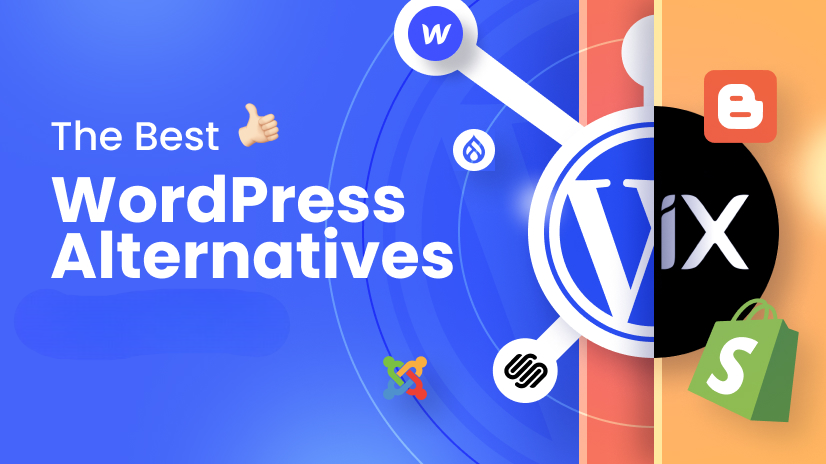
Wix and Squarespace are the go-to choices for people who want a beautiful site without touching code. Wix offers a drag-and-drop editor with enormous freedom to place elements anywhere, backed by a large template library, making it ideal for small businesses and personal sites. Squarespace takes a more curated approach, with elegant, design-led templates that are hard to make look bad, which appeals to creatives, portfolios, and brands that prioritise polish. Both handle hosting and maintenance for you, removing the technical burden entirely.
For designers and stores: Webflow and Shopify
Webflow sits between visual builders and hand-coding, giving designers pixel-level control and clean, professional output without writing code directly — a favourite for those who want custom design without a developer. Shopify, by contrast, is built for one job and does it exceptionally: selling. If your primary goal is an online store, Shopify’s payment processing, inventory management, and checkout are purpose-built and reliable in a way that general platforms struggle to match. Choosing between them comes down to whether design flexibility or e-commerce depth is your priority.
For writers and developers: Ghost, Joomla, and Drupal
Ghost is a lean, fast platform designed around publishing and newsletters, ideal for writers and creators who want a distraction-free focus on content and built-in subscriptions. Joomla and Drupal, meanwhile, appeal to more technical users and organisations with complex needs — they offer WordPress-like power and control, with Drupal in particular favoured for large, security-sensitive sites. These are less about ease and more about capability for those willing to invest in learning them.
How to choose the right one
Start from your goal rather than the feature list. If you want the easiest path to a good-looking site, choose Wix or Squarespace. If design control matters most, look at Webflow. If you are selling products, Shopify is the natural home. If you publish written content, consider Ghost. And if you need enterprise-grade flexibility and have the technical resources, Joomla or Drupal — or WordPress itself — may still be right. Also weigh ongoing cost, how much you will need to scale, and how comfortable you are managing technical details.
Final thoughts
There is no single best website platform, only the best platform for your specific situation. WordPress remains an excellent choice for many, but the alternatives have matured to the point where the honest answer is almost always “it depends on what you are building.” Define your priorities first — ease, design, commerce, or control — and the right platform becomes far easier to identify.
Related Guides
Continue reading on related topics: