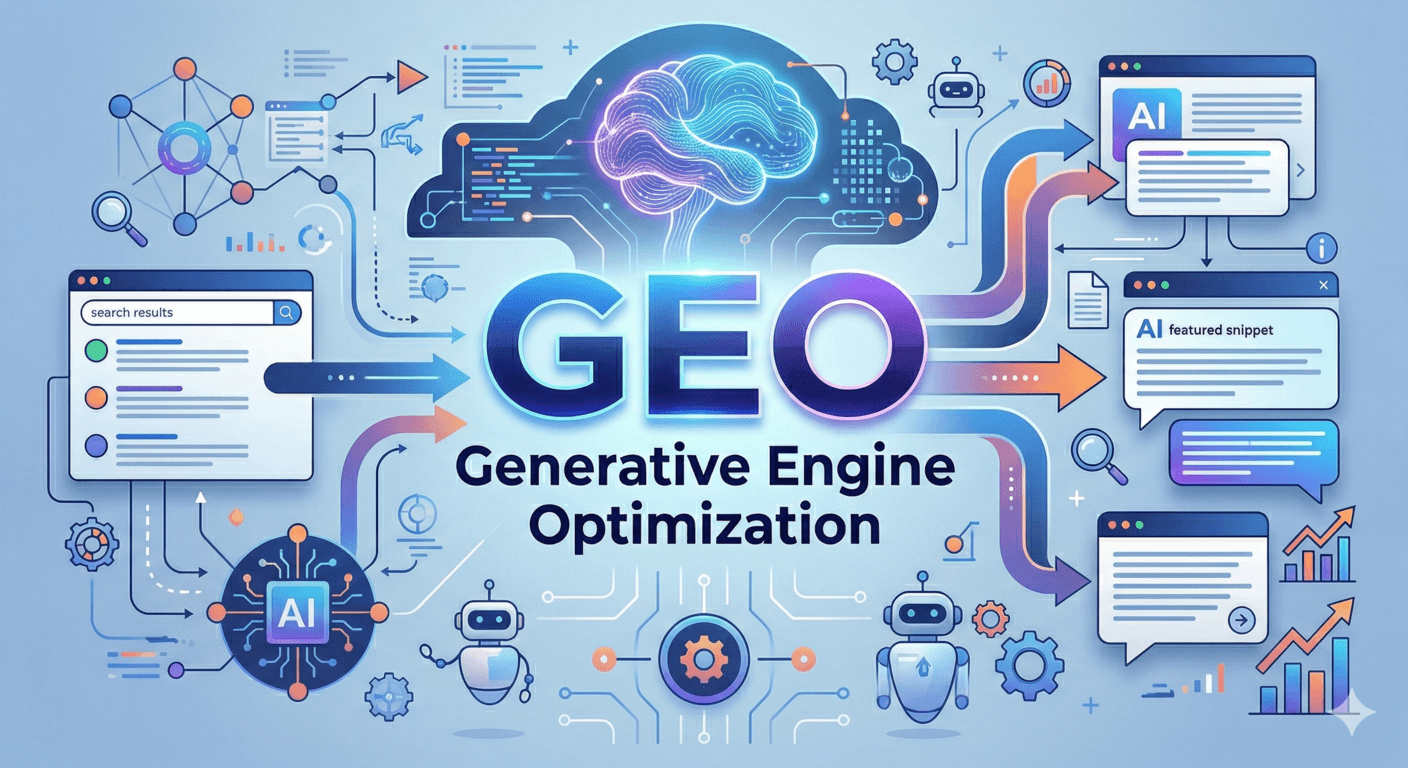

Search is undergoing its biggest change since Google first indexed the web. Instead of typing a query and scanning ten blue links, people increasingly ask a question and receive a single synthesised answer from an AI system such as Google’s AI Overviews, ChatGPT, Bing Copilot, or Perplexity. This shift has created a new discipline that practitioners call AI SEO, or Generative Engine Optimization (GEO): the practice of making your content the source that AI systems trust, understand, and quote. This guide explains how it works and how to adapt without abandoning the fundamentals that already make content valuable.
What GEO actually means
Traditional SEO optimises a page so it ranks highly on a results page, where the user still clicks through to read. GEO optimises content so an AI model selects it as part of the answer it generates directly. The difference is subtle but important: in classic search you compete for a position, whereas in generative search you compete to be understood and cited. That reframes the goal from “target this keyword” to “answer this question so clearly and credibly that a language model can lift the answer with confidence.” Keywords still matter, but context, clarity, and demonstrable expertise matter more.
How AI search engines decide what to surface
Generative search systems are built on large language models that interpret meaning rather than matching strings. When a user asks a question, the system retrieves candidate sources, evaluates how well each one answers the intent, and synthesises a response — often citing the sources it relied on. In practice this means the model rewards content that states its answer plainly, backs claims with evidence, comes from a recognisable and trustworthy author, and is structured so a machine can parse which passage answers which question. Thin, vague, or purely promotional pages rarely get selected, because the model has little reason to trust or quote them.
The platforms that matter
GEO is not a single channel. Google’s AI Overviews now summarise answers above traditional results, pulling from multiple authoritative pages. Microsoft’s Bing with Copilot answers conversationally and cites its sources, rewarding well-structured, referenced content. ChatGPT, when browsing, pulls from clearly written and trustworthy pages. Perplexity is built around citations and accuracy, so it favours content that is verifiable. Beyond text, discovery increasingly happens inside YouTube, TikTok, Instagram, Amazon, and LinkedIn, each of which uses its own signals — engagement and clear titles on video platforms, reviews and descriptions on Amazon, professional authority on LinkedIn. A serious GEO strategy considers where your audience actually asks their questions, not just your website.
The ranking factors that drive AI visibility
Across these platforms, a consistent set of qualities determines whether your content gets used. Authority is foundational: credible sources, a clear author identity, and a recognisable brand give a model reason to trust you. Genuine content quality — depth, accuracy, and answers to the follow-up questions a reader would naturally ask — is what makes a passage worth quoting. Context, meaning natural language that matches real user intent rather than keyword stuffing, helps the model map your writing to the question. Clean structure with logical headings and short, focused sections lets a system locate the exact passage it needs. Structured data such as FAQ, Article, and How-To schema makes that mapping explicit. Finally, engagement signals and freshness — content that people interact with and that stays up to date — reinforce that the source is alive and reliable.
How to write content AI systems will quote
The most effective GEO writing pattern is simple and reader-first. Start each section with the real question a person would ask, then give a direct, self-contained answer in the first sentence or two, before expanding with the depth, examples, and evidence that justify it. This mirrors how models extract answers: they look for a clear claim they can lift, supported by reasoning they can verify. Using an FAQ format for common questions helps both extraction and readability. Crucially, none of this requires tricks — it simply rewards writing that is clear, honest, and genuinely useful, which is exactly what human readers want too.
Advanced strategies for sustained visibility
Beyond individual pages, lasting authority comes from covering a topic comprehensively. Building topical clusters — a set of interlinked articles that thoroughly address a subject — signals genuine expertise rather than one-off coverage. Optimising for E-E-A-T (experience, expertise, authoritativeness, and trust) means showing real first-hand knowledge, naming credible authors, and earning references from other reputable sources. A multi-platform presence spreads your expertise across your site, video, and social channels so you appear wherever the question is asked. And because many AI queries are spoken aloud, writing in natural, conversational language with concise direct answers also helps you surface in voice search.
Common mistakes that keep you out of AI answers
The failures are predictable. Keyword stuffing signals manipulation rather than expertise. Thin or shallow content gives a model nothing worth quoting. Copied or templated content, produced at scale without added insight, is easily recognised and discounted — a particularly important warning in an era of easy AI generation. Ignoring user experience, or letting content go stale, quietly erodes the trust signals that GEO depends on. In short, the shortcuts that once gamed classic SEO are exactly what generative systems are designed to filter out.
Where this is heading
The trajectory is clear: search is moving from delivering links to delivering answers, and the winners will be sources that are genuinely authoritative, well-structured, and trustworthy. Branding and credibility will matter more, not less, because when a model can only cite a few sources it will choose the ones it trusts most. The practical takeaway is reassuring rather than intimidating — write for humans first, optimise for machines second, and focus on real value instead of tactics. Content built to actually help your reader is, increasingly, the same content that AI systems choose to surface.
Conclusion
GEO is less a reinvention of SEO than a return to its original promise: reward the most useful, credible answer. By understanding how generative systems evaluate sources, structuring your content around clear questions and direct answers, demonstrating real expertise, and staying current, you position your site to be selected as AI search reshapes how people find information. The businesses that treat this shift as an invitation to raise quality — rather than to chase another loophole — are the ones that will remain visible.
Related Guides
Continue reading on related topics: